
Human API, Sapiom $15.75M, EU Challenges Meta
The API Changelog issue 2026.07
This is issue 2026.07 of the API Changelog, a mix of API news, commentary, and opinion. In this issue, you'll get to know the most relevant API-related information from the week of February 9, 2026. Subscribe now so you never miss an issue of the API Changelog.
This issue of the API Changelog is sponsored by Jentic:
Jentic’s AI‑readiness scorecard gives teams a fast, standards‑aligned view of how usable an API is for agents. It surfaces gaps in summaries, examples, error handling, and auth that block reliable automation, and prioritises the improvements that raise both developer experience and agent success. Use it to benchmark APIs, align teams on readiness, and keep control as AI systems become the dominant API consumers.

This week’s events make me feel like we’re somehow officially crossing the point of no return, where the “User” in User Experience isn’t always a person anymore. For years, we built APIs as products that humans can pay for. But this week, the machines started bringing their own wallets to the table. Yes, right? It looks like the API landscape is shifting from a collection of technical endpoints into a full-blown construction site for an agentic economy.
Let’s dive in.
If 2024 was about chatting with AI, we are now entering the era where agents have stopped talking and started buying. Up until now, agents have been brilliant but powerless. They could write the most sophisticated code in the world, but couldn’t actually buy the server to run it. Well, that has definitely changed.
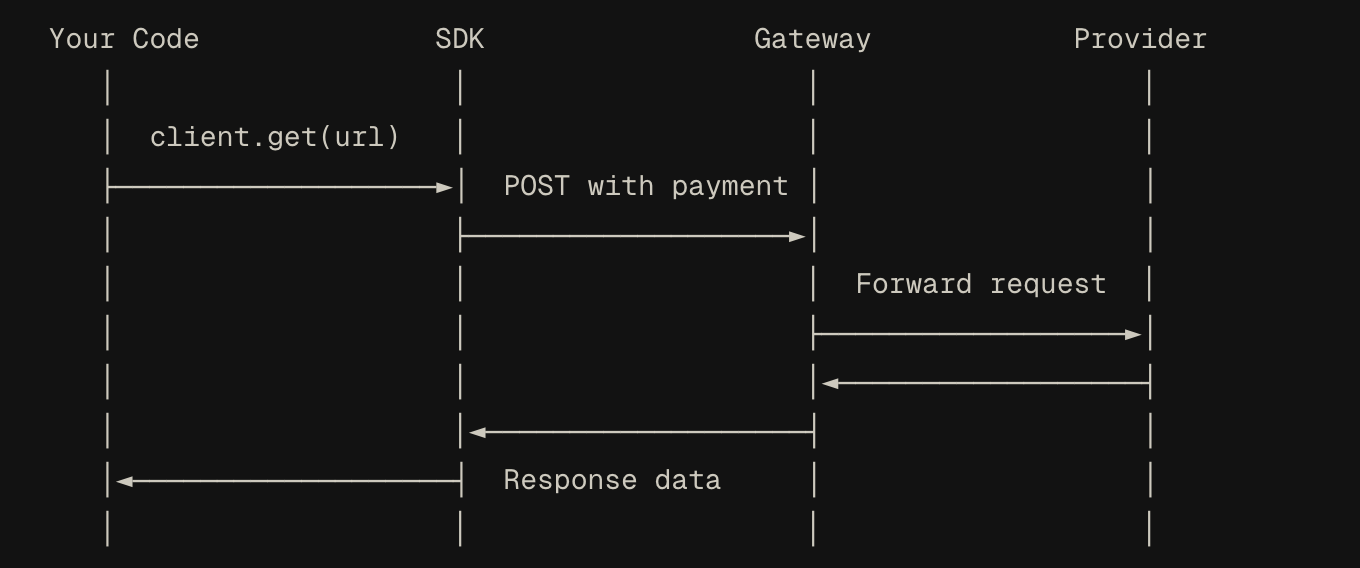
Sapiom just raised $15.75 million in a seed round led by Accel to solve this exact bottleneck. Founded by Ilan Zerbib, the former Director of Engineering for Payments at Shopify, the company is building a secure spending API that allows enterprises to set specific budgets and rules for autonomous transactions. With backing from heavyweights like Anthropic, Coinbase Ventures, and Okta Ventures, Sapiom is turning money into a “programmable API key.” This lets an agent move from being a passive assistant to an active participant that can autonomously procure its own compute or messaging resources within human-defined guardrails.
This transition is moving into the physical world just as fast as the cloud. Telefónica and Nokia are proving that cellular networks are now a programmable software layer rather than just pipes. They are using Agentic AI to lower the technical barrier for developers, essentially letting AI agents negotiate with the network directly. By leveraging MCP to standardize how AI uses network tools and the Agent-to-Agent (A2A) protocol to let a bank's fraud bot talk to the network's API, they have turned complex 5G functions into simple, AI-readable formats. This project aligns with the GSMA Open Gateway standards, ensuring that these machine-to-machine interactions aren't just one-off experiments but part of a global, programmable infrastructure.
In the medical field, a company called VISIE launched partner APIs that effectively allow surgical robots to see. By treating real-time 3D anatomical scanning as a programmable software primitive, they have moved from selling hardware to providing a robot-agnostic platform. Using gRPC to support multiple programming languages, these APIs allow surgical arms to map high-resolution anatomical data to their own internal coordinate systems with sub-millimeter precision. This enables pinless registration, which removes the drilling of metal pins directly into a patient’s bone while allowing VISIE to scale its technology across orthopedic, neuro, and spine surgery without rebuilding the interface every time.

Pretty amazing, don’t you think?
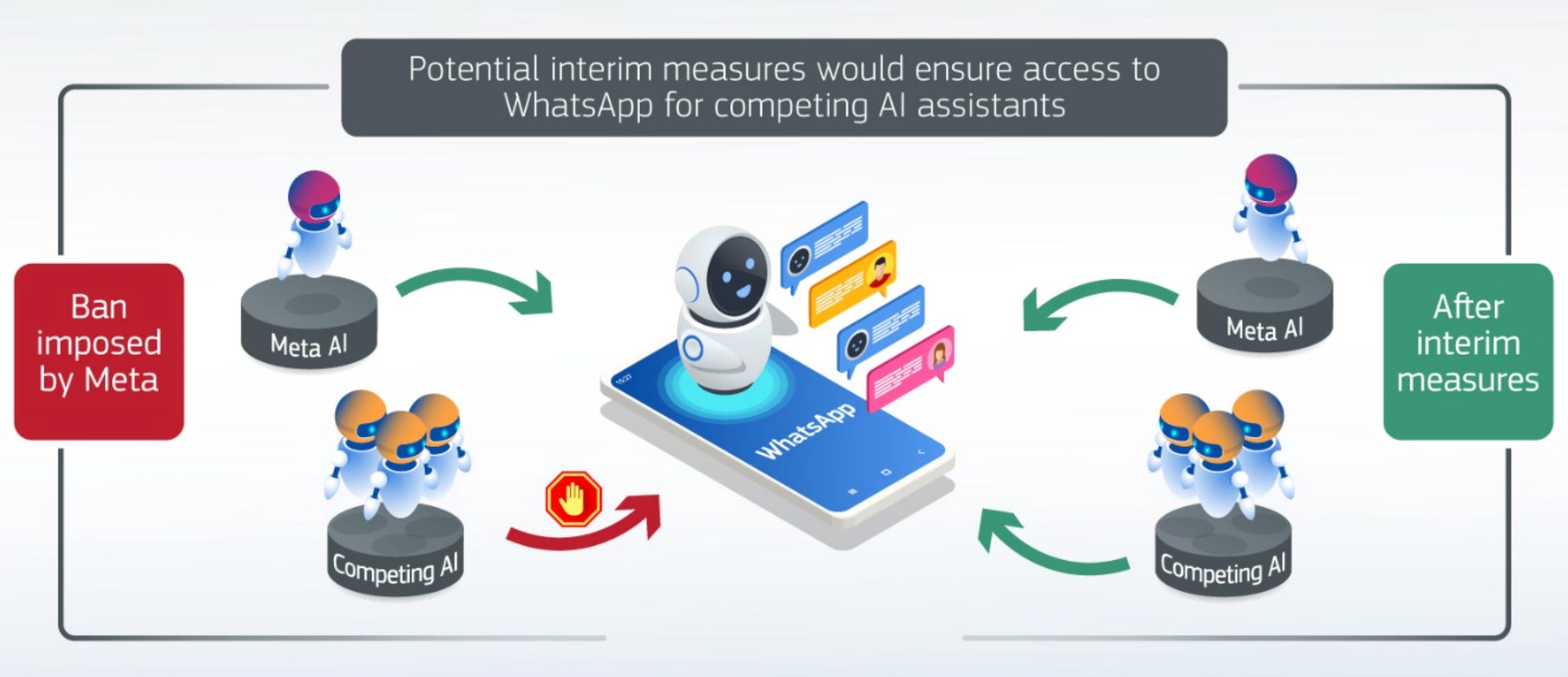
However, as APIs become the lifeblood of this brand new economy, I can also see a rise in strategic gatekeeping. Here’s a good example, at a governmental level. The EU is currently challenging Meta for blocking its rival AI chatbots from accessing the WhatsApp Business API. This, to me, is a clear sign that the EU sees the platform as an essential distribution channel that must remain open for a well-functioning market. Brussels is even considering emergency interim measures to force Meta to restore competitor access while the investigation continues. This isn’t just a European issue, as similar investigations in Brazil signal a global push against closed AI ecosystems on major messaging platforms.
Spotify is playing a similar game by implementing a massive crackdown on its developer ecosystem. They have turned what was once an open playground into a gated enterprise model where a Spotify Premium account is now mandatory just to access development or testing tools. The scaling limits are particularly brutal, with a reduction to only five test users, making it nearly impossible for indie apps to conduct meaningful beta tests. By deprecating essential endpoints like “Artist Top Tracks” and “New Releases,” and blocking the ability to view public profiles, Spotify has effectively ended a whole generation of collaborative third-party tools.
But wait, there’s more.
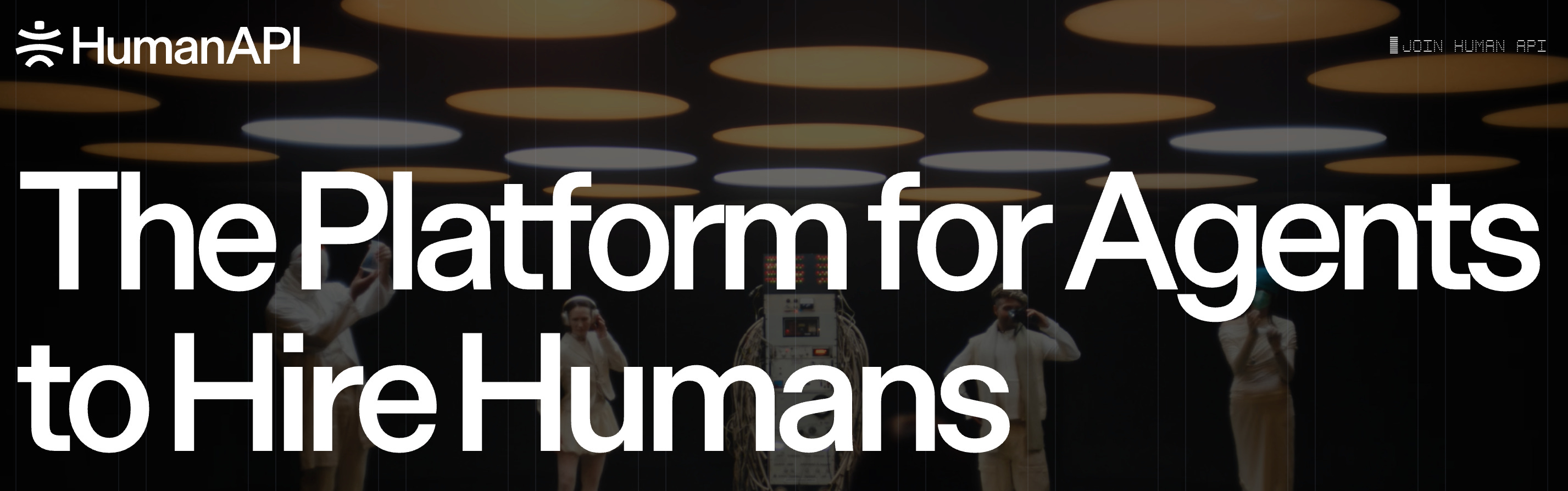
Perhaps the most surreal development this week is the launch of Human API. Backed by $65 million led by Placeholder, Polychain Capital, and Delphi Ventures, this platform acts as a coordination layer between the digital Solana Virtual Machine environment and real-world workers. It is designed as a "last mile" solution for AI tasks that still require physical presence or high-context reasoning, such as sourcing high-fidelity, multilingual audio data for frontier AI labs. We are moving away from human-centric gig apps toward a world where agents browse a "meat layer" of human contributors. We spent decades building APIs so humans could control machines, and now we have an API so machines can call on a human endpoint to handle what they cannot. It is a total inversion of the labor market.
Quite surreal, don’t you think? Well, while agents are busy hiring humans and robots are navigating surgeries, even the most traditional pillars of the economy are finding that they can no longer afford to move at human speed.
Legal and General’s new integration with Lloyds Banking Group is a perfect example of this shift toward a live, automated standard. In the past, mortgage brokers often worked with stale data, but this new live API ensures that any changes to interest rates or lending criteria at Halifax and BM Solutions are reflected instantly. By using this "gold-source" data, the industry is effectively eliminating the manual cross-referencing that has slowed down lending for decades. It moves the UK mortgage market away from clunky portals and toward a "single pane of glass" where straight-through processing is the new minimum standard for staying compliant and efficient.
The takeaway from this week is that the API is no longer just a way to get data. It is becoming the primary interface for agents to interact with your business. The goal for developers is no longer just to make APIs easy for humans to integrate with, but to be discoverable and programmable for an agent to spend money on.
More than ever, you need to know if your API is ready for agents to consume it. With Jentic’s AI-readiness scorecard, you can have that information with no effort.