This is issue 2026.22 of the API Changelog, a mix of API news, commentary, and opinion. In this issue, you'll get to know the most relevant API-related information from the week of May 25, 2026. Subscribe now, so you never miss an issue of the API Changelog.
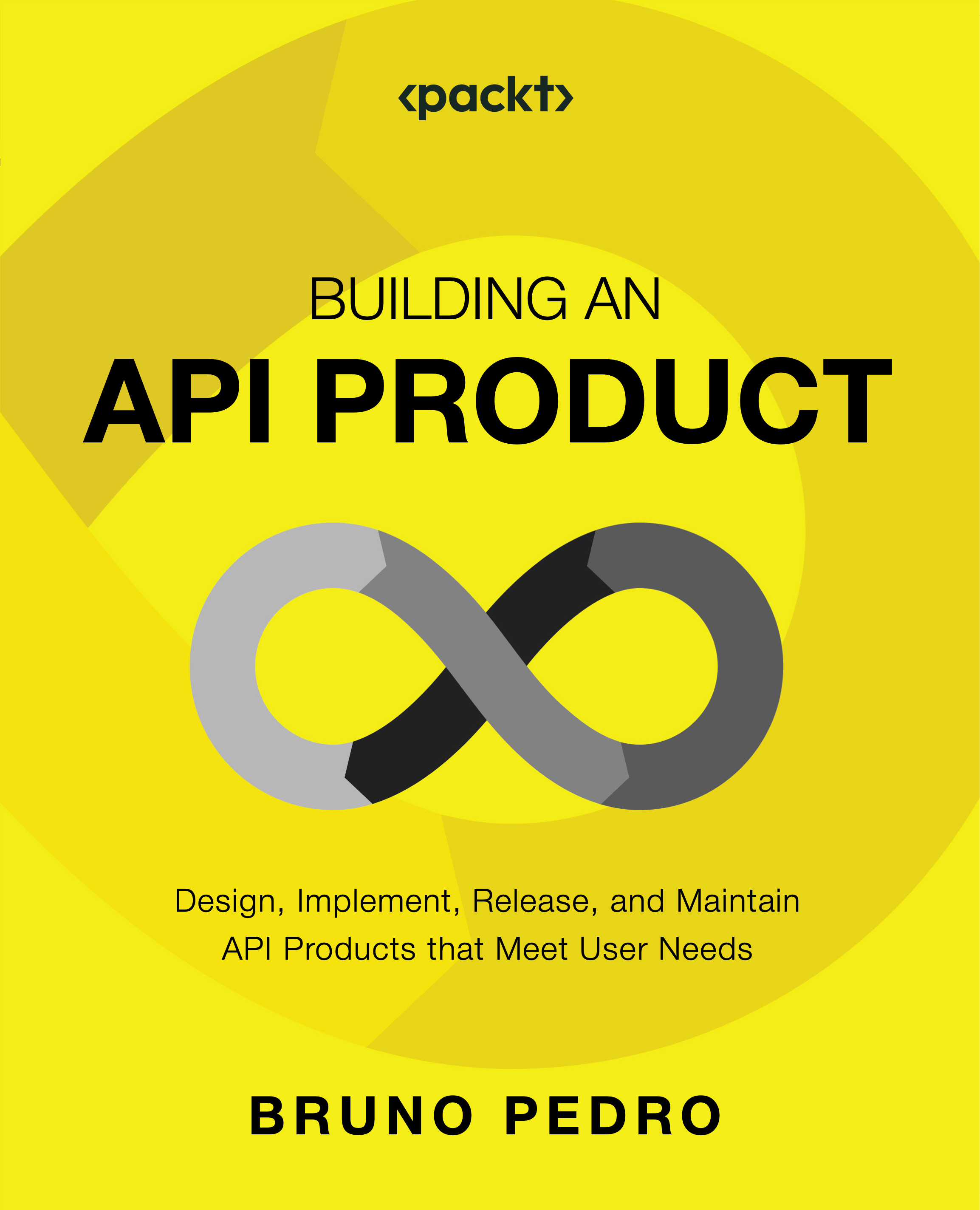
What are the steps to create a successful API product? Learn about it by reading "Building an API Product."
The book targets Product Managers and non-technical people who want to know what it takes to build API products.
If this isn’t the book for you, perhaps someone you know would like to learn from it. Share it with your contacts and help us spread the word.
This week, I have noticed that the programmatic economy is accelerating as traditional financial infrastructure, generative media, and enterprise DevSecOps converge onto unified API planes. From institutional capital markets to the foundation models powering autonomous agents, this week’s movements highlight a structural shift toward eliminating manual friction and driving down token-level overhead to achieve true machine-to-machine automation.
Institutional digital asset markets took a major step forward with Caladan’s launch of its API Liquidity service, an infrastructure rollout providing automated, programmatic access to deep, aggregated digital asset liquidity across more than 100 distinct tokens. In this environment, the API serves as the core technical bridge connecting institutional trading desks directly to Caladan’s multi-venue liquidity engine, allowing algorithmic platforms to bypass manual user interfaces.
Simultaneously, Citi Investor Services has expanded Financial Information eXchange (FIX) API connectivity to its proprietary, global exchange-traded fund platform, ACES (Advanced Citi ETF System), specifically targeting clients across the Asia Pacific region. Initially rolled out in Australia with a planned expansion to Hong Kong, this integration allows institutional Authorized Participants to link their internal order management systems directly to Citi’s platform via a standardized communication gateway.
Further downstream in the corporate banking sector, Garanti BBVA has launched a new BKM-integrated Request to Pay API designed to modernize digital payment collections for corporate clients, commercial businesses, and SMEs. Built directly on the open banking infrastructure of the Interbank Card Center and the Central Bank of Türkiye’s FAST instant-payments network, the API functions as a secure communication pipeline linking a business’s internal ERP or billing software to the bank’s digital channels.
The enterprise content landscape is also adjusting to this programmatic shift, marked by Law.com and current awareness platform Vable announcing a strategic API integration. This milestone represents Law’s first-ever commercial API content partnership, designed to embed its trusted legal intelligence directly into the platforms that legal professionals use daily. In this deployment, the API acts as an automated ingestion and delivery engine, allowing Vable to programmatically pull full article content, headlines, and summaries from the entire Law and NewsVault archive to enhance backend search relevance and accuracy.
Agentic DevSecOps and Identity Verification steps up as generative AI continues to enable autonomous agents to construct and deploy production software at machine speed, APIs have fundamentally become both the primary attack surface and the ultimate control plane of enterprise cloud architectures.
To address this paradigm shift, 42Crunch announced a breakthrough integration with Anthropic’s Claude Code, introducing dedicated AI coding plugins that unlock an autonomous, end-to-end Agentic DevSecOps model for the enterprise. Operating directly within the AI agent’s active coding workflow, the 42Crunch plugin provides real-time static and dynamic API security testing, automatically auditing OpenAPI contracts and scanning for OWASP Top 10 vulnerabilities the moment code is generated.
On the identity and compliance front, Spain-based startupDidit secured an additional $6 million in Seed funding, raising its total capital to $7.5 million to scale its global, AI-native infrastructure designed to intercept synthetic fraud, deepfakes, and automated network attacks. Didit delivers its security stack through a single, developer-first API that unifies Know Your Customer, Know Your Business, transaction monitoring, and crypto wallet screening into a modular, programmable surface.
In tandem with shifting core inference economics, fal has launched as the official day-0 API partner for Krea 2, the debut foundation image model trained entirely from scratch by creative AI lab Krea. Aimed at giving developers granular aesthetic control over raw, niche, and experimental visuals without the overly polished look of legacy media models, Krea 2 is now accessible via a production-ready API hosted on fal’s developer-focused cloud.
To simplify managing these expanding frontiers, Blackmagic AI announced a unified, production-ready AI gateway designed as a direct, cost-efficient alternative to OpenRouter for developers managing complex, multi-model workflows. Operating behind a single OpenAI-compatible base URL and a solitary API key, the gateway functions as an abstraction and routing plane that bridges developer applications to 13 distinct AI providers, including OpenAI, Anthropic, Google, DeepSeek, and Black Forest Labs.
Finally, AI web data platform Thunderbit expanded its ecosystem into infrastructure-level tools with the launch of a high-fidelity Web Data API, an MCP server, and a CLI. Designed to programmatically transform complex, structurally dynamic websites into clean Markdown or structured JSON schemas for LLMs and retrieval-augmented generation (RAG) pipelines, the suite is powered by two distinct AI engines. Thunderbit Distill acts as an adaptive HTML-to-Markdown parser that ignores fragile, legacy CSS selectors to extract semantic web content without boilerplate elements, while Thunderbit Extract maps live URLs directly into developer-defined JSON structures.
Ultimately, this week’s developments underscore an industry-wide push toward deep ecosystem integration and the systemic reduction of engineering friction. Whether by abstracting complex financial data streams via standardized protocols, establishing autonomous security guardrails within agentic workflows, or permanently reducing the cost of frontier model token delivery, the API economy is rapidly moving beyond simple data piping. The emerging standard favors highly modular, open-access, and developer-centric architectures designed to support a scalable, machine-first operational landscape.
Looking forward to next week’s updates!
Thanks for reading The API Changelog! Subscribe now for free.