This is issue 2026.23 of the API Changelog, a mix of API news, commentary, and opinion. In this issue, you'll get to know the most relevant API-related information from the week of June 1, 2026. Subscribe now, so you never miss an issue of the API Changelog.
What are the steps to create a successful API product? Learn about it by reading "Building an API Product."
The book targets Product Managers and non-technical people who want to know what it takes to build API products.
If this isn’t the book for you, perhaps someone you know would like to learn from it. Share it with your contacts and help us spread the word.
The tech sector is going through a big shift right now. As autonomous AI agents become more common, the way we think about APIs has to change. We can no longer build APIs just for human developers to read documentation and write code. Instead, we need to design programmatic infrastructure built for machine-to-machine communication.
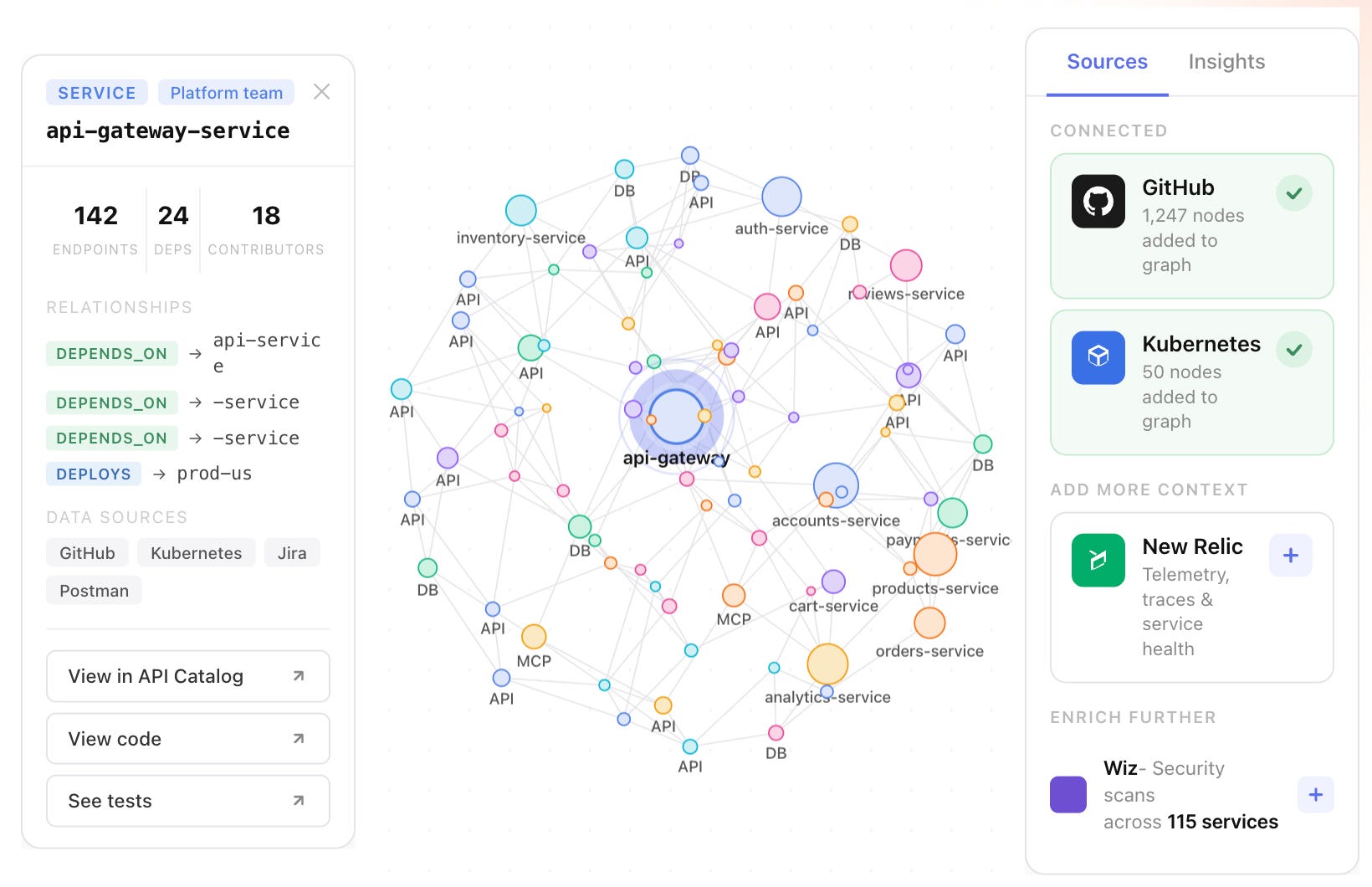
The Context Graph is a part of Postman’s AI Engineer stack. It’s a “living map of the APIs and services across an organization.”
While companies like Postman push toward an agentic future, other tech giants are struggling to get their programmatic interfaces out the door, highlighting the intense pressure to monetize massive infrastructure investments.
Meta Platforms has repeatedly delayed the public rollout of the developer API for its flagship Muse Spark AI model due to persistent software bugs and underlying system issues. While Meta AI Chief Alexandr Wang initially promised the API was coming soon, the subsequent two-month delay has intensified investor scrutiny regarding how quickly the company can monetize its projected $125 billion to $145 billion capital expenditure boom. Meta has since confirmed that the API is undergoing testing with early partners and is slated for a broad release later in June 2026 to help close the enterprise distribution gap with rivals like OpenAI and Anthropic.
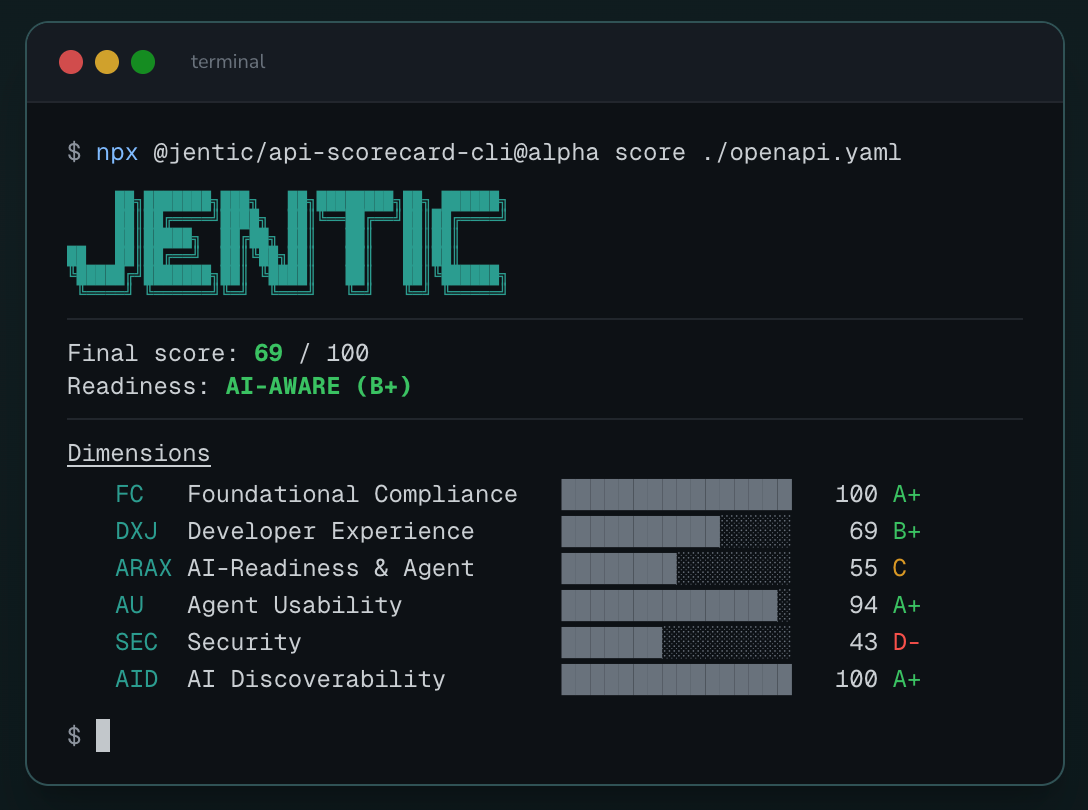
Because AI agents lack human intuition and require hyper-precise guidance to navigate backend systems, enterprise AI firm Jentic has launched a free, open-source API Scoring tool under the Apache 2.0 license. Integrating directly into CI/CD pipelines, Jentic’s tool automatically audits OpenAPI documents across dimensions like machine usability and AI discoverability, ensuring that exposed corporate endpoints are optimized for reliable agent execution rather than human interpretation.
Jentic grades APIs across six dimensions: foundational compliance, DX, AI-readiness, agent usability, security, and AI discoverability.
Simultaneously, device intelligence leader Fingerprint has addressed client-side validation gaps by launching the preview of its AI Assistant Detection alongside a platform-agnostic Automation Intelligence API. Because frontier AI models from OpenAI, Anthropic, and Google bypass traditional JavaScript browser checks by pulling web data directly through backend HTTP requests, Fingerprint’s new API operates directly at the middleware or CDN edge to cryptographically verify legitimate AI assistants and immediately block malicious scraping bots spoofing AI user-agents.
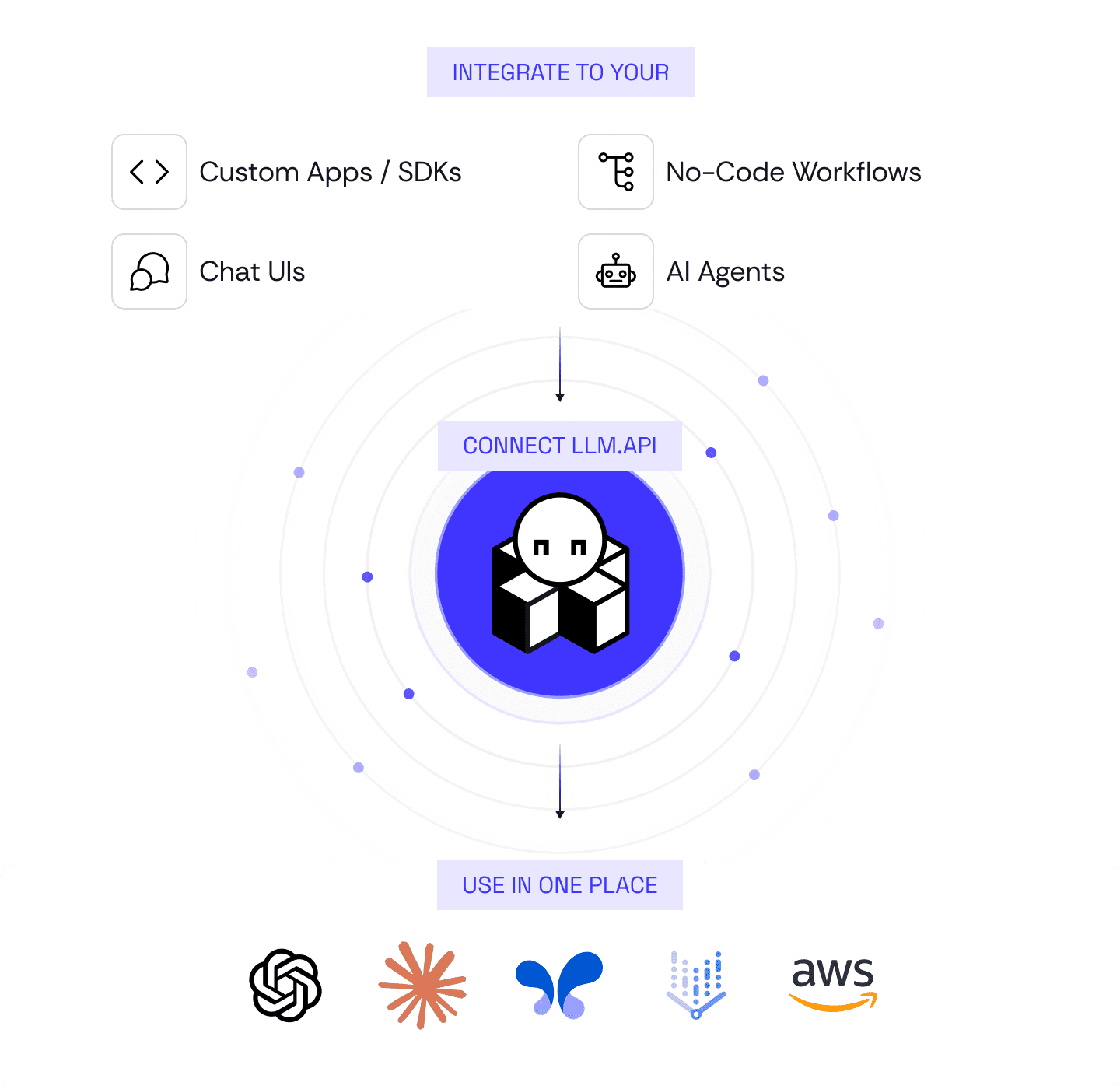
With the LLM API, Ukrainian companies can integrate with more than 400 AI models using a single interface.
Meanwhile, optimization platforms are focused on making this programmatic data directly actionable within native marketing stacks. OtterlyAI has launched a public API alongside a community-driven marketplace of over 101 production-tested workflows, liberating its Generative Engine Optimization (GEO) data from internal dashboards. To demonstrate the power of this API, OtterlyAI paired the release with a single-file Claude Skill, allowing Anthropic’s Claude to programmatically ingest real-time brand performance and search visibility metrics directly into chat interfaces.
Beyond data extraction and analysis, the API ecosystem is establishing the foundational transactional layer required to achieve true machine-to-machine economic autonomy. Solving a major friction point where AI agents lacked secure, network-compatible financial rails, stablecoin infrastructure provider Crossmint has launched its public Agentic Cards API in partnership with Visa Intelligent Commerce and Basis Theory. This API allows developer platforms like Claude Code and Zo Computer to issue tokenized, short-lived payment credentials backed by PCI-compliant vaults, enabling AI agents to autonomously complete purchases within strict spending limits without ever exposing raw credit card numbers.
Ultimately, the API landscape is no longer just a technical bridge for connecting software applications. As frontier labs scramble to iron out backend bugs and deliver reliable model APIs, the companies that successfully lower programmatic friction while enforcing strict governance will inevitably dictate the speed and safety of the next machine-driven economic wave.
Until next week!
Thanks for reading The API Changelog! Subscribe now for free.