This is issue 2026.24 of the API Changelog, a mix of API news, commentary, and opinion. In this issue, you'll get to know the most relevant API-related information from the week of June 8, 2026. Subscribe now, so you never miss an issue of the API Changelog.
What are the steps to create a successful API product? Learn about it by reading "Building an API Product."
The book targets Product Managers and non-technical people who want to know what it takes to build API products.
If this isn’t the book for you, perhaps someone you know would like to learn from it. Share it with your contacts and help us spread the word.
As we can all see, the industry is moving quickly toward an economy built on AI and agents. And this is changing how we design, secure, and monetize APIs.
Many platforms are moving away from the old, rigid frameworks. The choice is to pick technology that makes it easy to do things like showing customer data in real time or delivering instant audio streams in many languages.
But this move toward automation brings new risks to infrastructure. Because of these vulnerabilities, we’re seeing a push for better security. Companies are now focusing on runtime scanning and identity governance. They’re also building compliance layers designed to keep autonomous agents under control.
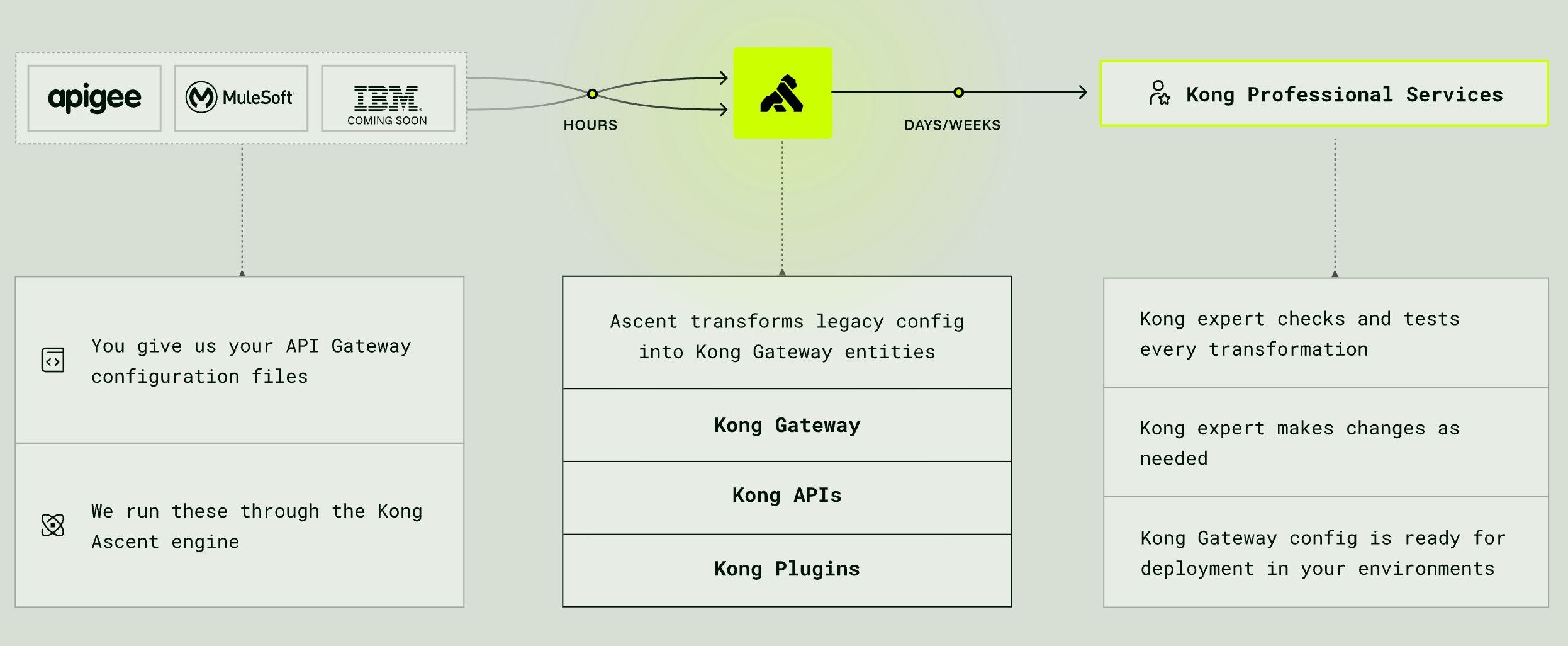
The friction of moving off legacy enterprise infrastructure has long been a primary roadblock to technical agility. Knowing that, Kong launches Ascent to help companies get agentic AI-ready. Built specifically to accelerate transitions away from aging platforms such as MuleSoft and Apigee, Kong Ascent combines automated code parsing and policy classification to migrate workloads to the unified Kong Konnect ecosystem.
Kong offers AI-assisted, human-in-the-loop automated API migration services available through Kong Professional Services.
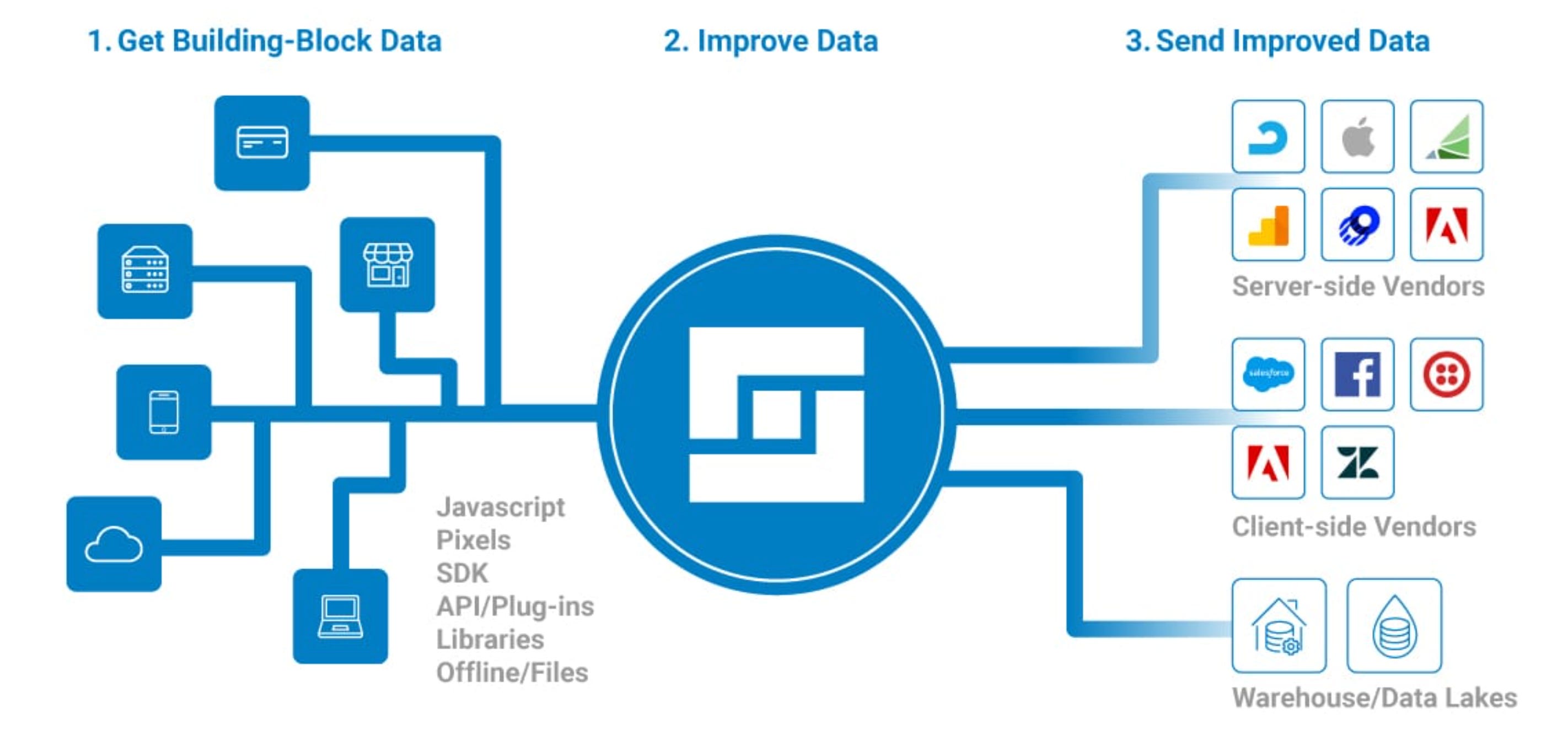
Simultaneously, data availability at the edge is reaching lower latencies. Tealium’s rollout of the Context API addresses the long-standing divide between the deep data pools of centralized warehouses like Snowflake and the immediate data demands of live customer sessions. Functioning as an evolution of its legacy Moments API, this model-neutral presentation layer serves real-time insights with a response window of just sixty milliseconds, entirely bypassing the need for complex microservices or expensive data mirroring.
The Customer Data Hub is Tealium’s central platform for end-to-end management of customer data.
As frontier models push deeper into production environments, balancing elite capabilities with organizational safety boundaries requires innovative API architectures. Anthropic’s general release of Claude Fable 5 illustrates this challenge by bringing the reasoning capabilities of its highly restricted, security-focused architecture to mainstream developers. To mitigate national security risks and prevent model exploitation without completely shutting down access, Anthropic has engineered a clever multi-model routing pattern directly within its Messages API.
Update: Anthropic has since disabled Fable 5. According to their statement, the “US government, citing national security authorities, has issued an export control directive to suspend all access to Fable 5 and Mythos 5 by any foreign national, whether inside or outside the United States, including foreign national Anthropic employees.”
This intersection of advanced automation and raw data access is also reshaping technology, media, and intelligence markets. Blockworks’ recent acquisition of rival research platform Messari for a reported eight-figure sum reflects a major consolidation wave driven by institutional demand for structured crypto data. Bolstered by its recent valuation surge, Blockworks is leveraging Messari’s established API engine to create a dual-sided marketplace for token investor relations and verified issuer records.
A push for standardized, programmatic access is transforming traditional financial networks. Alkami Technology’s deep integration with Yodlee marks a major step forward for open banking by moving data aggregation services entirely to the industry-standard Financial Data Exchange API. This structural shift replaces traditional screen-scraping methods, which strained banking servers and required consumers to risk exposing their actual passwords to external apps.
Meanwhile, the voice processing field is experiencing a similar wave of democratization with the launch of Krisp’s Voice Translation v3 API. This release converts an enterprise-grade, low-latency translation engine into a self-serve platform for software engineers. Instead of forcing developers to manually string together separate models for transcription, translation, and text-to-speech synthesis, the new platform provides a single, unified audio infrastructure layer.
The travel industry is also undergoing an API overhaul designed to eliminate legacy friction. Travelport’s formal launch of its TripServices platform introduces a modern, cloud-native API designed to normalize fragmented multi-source travel data into a clean, structured schema. Financed by a substantial technology investment and developed alongside industry partners, this platform marks a strategic shift toward an AI-ready travel ecosystem.
On the programmatic trading side, multi-asset broker XBTFX has introduced a flexible, code-driven trading API designed to transition its platform into a highly adaptable financial infrastructure layer. Tailored for algorithmic traders and autonomous financial bots, this interface splits operational logic into two distinct communication paths.
This reality has catalyzed a new wave of deep governance adapters built specifically around Anthropic’s Claude Compliance API, with platforms like Linx Security, Opsin, TrendAI™, and Axonius integrating with this compliance stream to give security operations teams out-of-band visibility over enterprise AI interactions without introducing inline network friction:
TrendAI™ embeds this telemetry directly into its Vision One ecosystem, deploying local and cloud-based logging models that stream conversation logs and file transfers into XDR engines to flag advanced prompt injections and code leaks while respecting strict regional data rules.
As automated threat models become faster and more sophisticated, application perimeters require dynamic, real-time protection. F5’s expansion of its Web Application and API Protection solutions directly answers this threat vector, where malicious AI tools are deployed to scan, reverse-engineer, and exploit exposed software vulnerabilities at machine speed.
This week’s updates show that APIs are finally maturing beyond simple data pipelines into the nervous system of an agentic economy. Engineering teams must now design directly for machine consumers, whether managing financial data, travel sales, or AI threats. As the line between application logic and AI disappears, success belongs to organizations that prioritize low latency, clean schemas, and solid compliance.
Thanks for reading, and we’ll see each other next week!
Thanks for reading The API Changelog! Subscribe now for free.